Advance Solar Technology
How Biventionsolar’s Technology Works
A Different Kind of Solar Panel — Designed for More Power, More Often
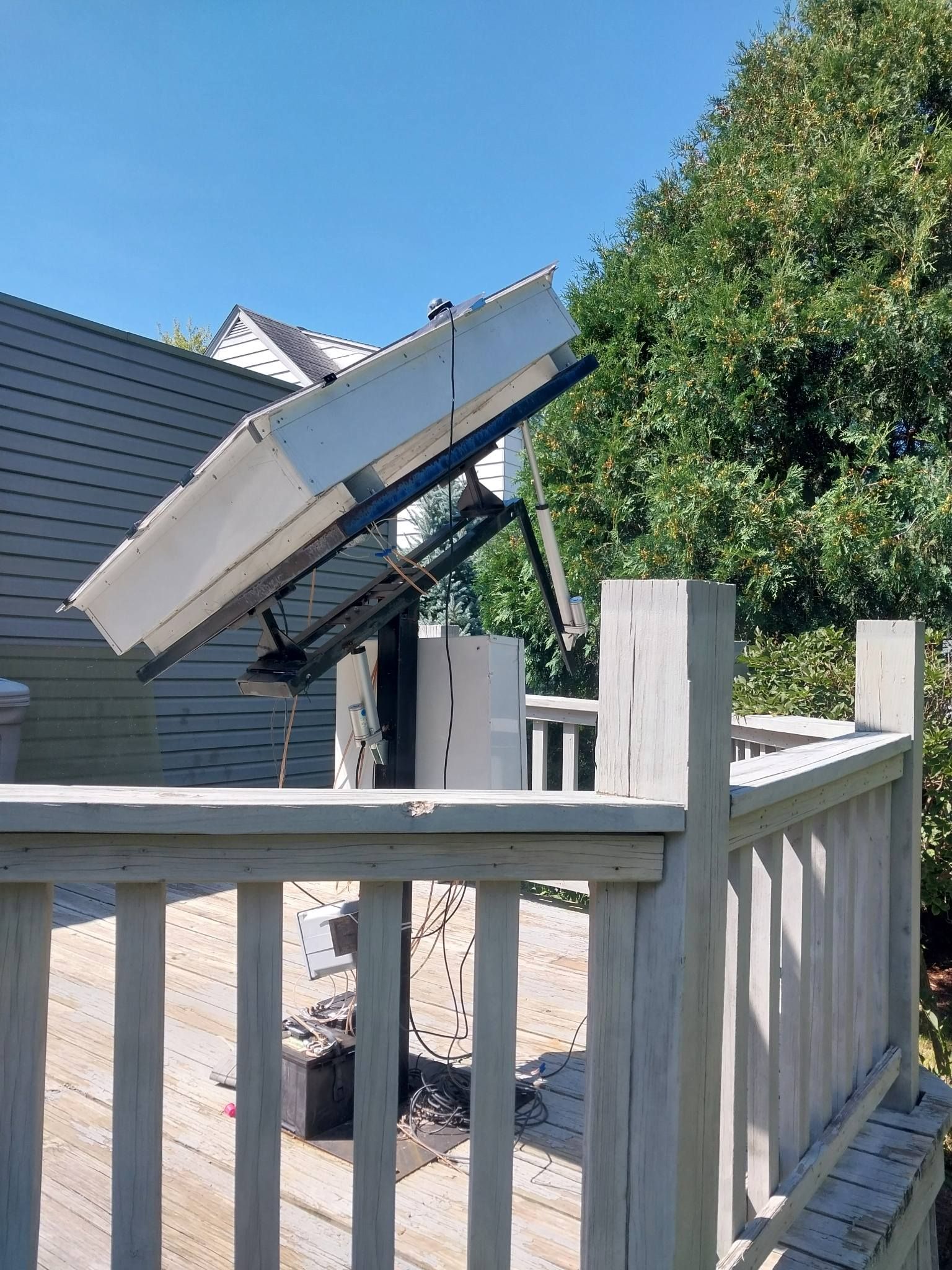
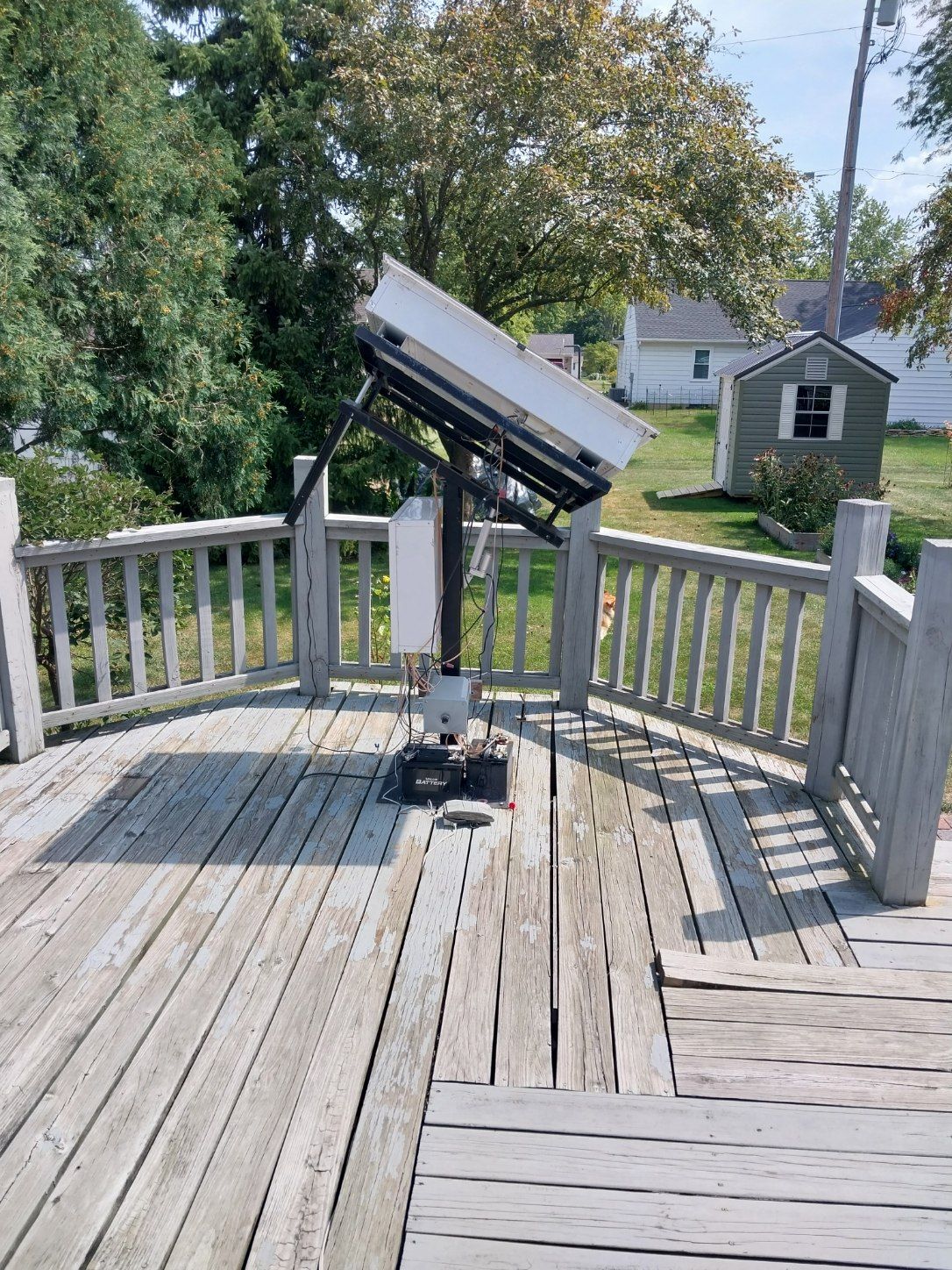
At Biventionsolar, we’ve challenged the assumptions of traditional solar panel design. Instead of relying solely on flat, two-dimensional photovoltaic (PV) panels that convert sunlight with limited efficiency, our technology reimagines solar power generation from the ground up. We’ve engineered a three-dimensional panel design, integrated with advanced solar tracking, to dramatically increase power output in the same footprint.
The result? More wattage per square yard, better performance in low-light conditions, and a system that’s built to maximize power throughout the day — not just at peak sunlight.
100W+
Per Square Yard
3D
Panel Design
Dual Axis
Solar Tracking
THE CHALLENGE
The Problem with Flat Solar Panels
Most commercial solar panels are designed to lie flat and depend almost entirely on the efficiency of the photovoltaic cells used.
These systems convert photons to electricity based on:
Cell quality (typically 15–20% efficiency)
Light striking the panel in a single pass
Performance degradation from shading or poor sun angles
In other words, the majority of incoming green light photons — the most active portion of the sun’s spectrum — go unused. Shading causes a drop to zero output,
and light angle plays a major role in limiting power generation. Even panels with reflective coatings can only do so much when light
only hits once and cell wiring struggles to compensate for shaded regions.
OUR SOLUTION
Our Solution: 3D Solar Panel Design with Integrated Tracking
Biventionsolar’s system is designed to overcome these legacy limitations with a multi-faceted approach:
Three-Dimensional Cell Arrangement
Unlike flat panels, our PV cells are arranged in 3D groupings that increase the density of conversion surfaces within the panel. This spatial configuration means that photons have multiple opportunities to strike a conversion surface, and reflected photons are redirected for secondary impacts — resulting in higher conversion rates.
Reflective Surfaces
We embed reflective elements within the panel structure. This captures and redirects unused photons back into the active conversion zone, which significantly boosts light utilization per unit of space. Light isn’t wasted — it’s recycled.
Shading-Resistant Wiring Configuration
Where most panels fail in shaded conditions due to parallel wiring (which stops energy transfer when amps drop), our panels are wired in series first, then in parallel. This allows the panel to continue generating wattage in partially shaded or cloudy conditions, delivering dependable power even when conditions aren’t ideal.
Dual-Axis Solar Tracking
Our panels are mounted on a dual-axis solar tracking system, which maintains alignment with the sun throughout the day. Tracking is not based on standard GPS or light sensors. Instead, our system aligns with geodetic coordinates, ensuring maximum exposure regardless of season or weather pattern.
This alignment is critical. A 10-degree deviation in angle can significantly reduce power output. By maintaining precise positioning, our system captures maximum wattage per hour — a feat that fixed rooftop systems cannot match.
OUR INNOVATION
Efficiency Redefined
Traditional solar panels speak in terms of “percent efficiency” based on lab testing and limited conversion. But when you factor in:
Photon recycling
through reflection
Increased density
via 3D cell layout
Continuous realignment
via dual-axis tracking
Reduced losses
from shading
For example: The Sun provides roughly 120 Watts of usable green
spectrum light per square meter — or about 100.3 Watts per square
yard.
Our prototype panel has achieved over 100W output per square yard,
meaning it reaches the full potential of available solar energy. That's
what we mean when we say: more power in the same footprint.
100W +
Output per Square Yard
Reaching full solar potential
PRACTICAL APPLICATION
Built for Real-World Use
Flexible Mounting
Because our panels must track the sun, they’re not designed for static roof installations. Instead, they’re suited for ground-mounted systems — ideal for residential yards, farms, commercial land, or standalone installations.
Configurable Panel Arrays
Panels are sold in scalable arrays of 36, 49, or 64 units. While larger arrays can generate kilowatts of power regularly, we also engineer these systems with wind resistance in mind — important for areas like Ohio that experience tornadoes and high wind events.
Performance Across Conditions
Even in overcast weather or under tree cover, our panels continue producing power — albeit at a lower rate — while flat-panel systems typically shut down. Over time, this leads to higher total energy production per year and a faster return on investment.
OUR PROCESS
Next-Level Tracking System in Development
We are currently engineering a new type of solar tracking system that moves beyond light-based sensors and GPS. Our approach will deliver improved performance through real-time geodetic
positioning and smarter rotational controls that can compensate for aging cells, seasonal shifts, and cloud cover diffusion.
This is a major evolution in solar tracking and one that positions Biventionsolar as a future-forward solar technology provider.
OUR INNOVATION
Scalable for Earth and Beyond
The physics of this system make it viable not only for use on Earth but potentially for space-based and planetary solar applications.
Because photon density differs by location:
200%+
In orbit
Potential efficiency over 200% compared to Earth
~200%
On the Moon
Similar performance potential
60%
On Mars
Expected output of 60% compared to Earth — still highly effective
While commercial use is the focus now, the scalability of the core technology opens possibilities for NASA, aerospace, and deep-space energy systems.
GOT QUESTIONS?
Summary: Smarter Solar Is Here
Whether you're looking to power your home, business, or agricultural operation, our technology ensures you get more from every ray of sunlight.
Biventionsolar delivers:
Over 100W output per square yard
Performance under partial shading
High-efficiency design using polycrystalline or monocrystalline cells
Optimized sun tracking that maintains ideal angles
Custom panel arrays ready for real-world deployment
The promise of scalable, next-generation solar power
Advance Solar Technology
Ready to Harness Smarter Solar?
Whether you're looking to power your home, business, or agricultural operation, our technology ensures you get more from every ray of sunlight.